War or Peace? Trump Issues Stark Iran Warning — “No More Mr. Nice Guy” — as Nuclear Standoff Reaches Breaking Point
President Trump’s blunt Truth Social post, a stalled ceasefire, a throttled oil strait, and a collapsing Iranian economy have combined into one of the most volatile diplomatic crises of the decade.
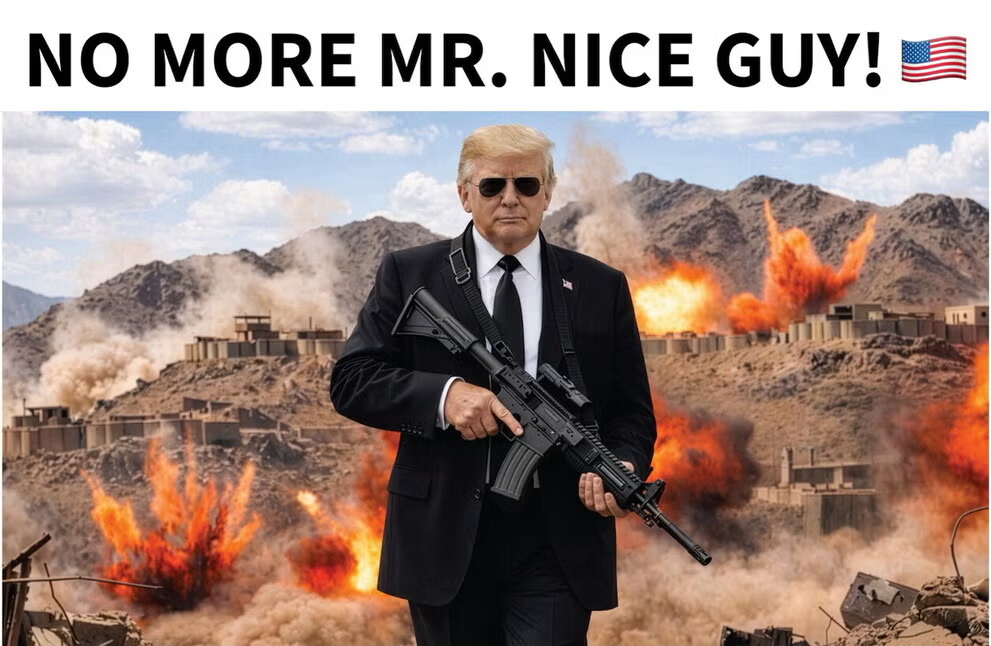
President Donald Trump issued a blunt, potentially historic warning to Iran on Wednesday, signaling the end of diplomatic patience and threatening intensified military action if Tehran fails to reach a nuclear agreement with Washington. The message — punctuated by a dramatic image of the president armed against a backdrop of explosions — landed with force across global capitals, markets, and chancelleries.
The striking post — which featured a bold graphic reading “No More Mr. Nice Guy” alongside a computer-generated image depicting Trump in a black suit holding a military-style weapon with explosions in the background — underscored the administration’s renewed resolve to escalate pressure should diplomacy continue to fail.
“Iran can’t get their act together. They don’t know how to sign a nonnuclear deal. They better get smart soon!”— President Donald Trump, Truth Social
Background: From Conflict to Ceasefire — and Stalemate
The warning arrives against a backdrop of escalating tension stretching back to February 28, when the United States and Israel launched a coordinated military operation aimed at dismantling Iran’s nuclear infrastructure and severing its support networks for proxy forces across the Middle East. A temporary ceasefire was brokered in early April, but negotiations toward a lasting settlement have since collapsed under the weight of Iran’s fractured political leadership.
According to the Trump administration, competing factions within Tehran have been unable to form a unified negotiating position, creating a vacuum that has frustrated American diplomats and fueled impatience in Washington. That frustration culminated in the cancellation of a planned diplomatic trip to Pakistan — which has been serving as a key intermediary — and now, the president’s incendiary social media broadside.
The Strait of Hormuz: A Choke Point for the World
At the physical and symbolic center of the crisis sits the Strait of Hormuz, through which approximately one-fifth of the world’s oil supply flows daily. Iran has disrupted shipping through the strait in a bid to raise global energy prices and force the United States to ease its naval blockade — a gamble that has added turbulence to oil markets worldwide and drawn urgent calls for resolution from European and Asian allies.
Iran has signaled willingness to reopen the strait in exchange for the lifting of the blockade, but with negotiations at an impasse, the gesture remains theoretical. Meanwhile, the U.S. naval presence has effectively crippled Iran’s ability to export oil — its primary revenue source — setting in motion a cascade of economic devastation inside the country.
“The closure of the Strait of Hormuz has made the stakes not just regional, but global — touching everything from household energy bills in Berlin to factory output in Tokyo.”— FFN Analysis
Iran’s Economy in Free Fall
Years of international sanctions had already left Iran’s economy brittle. The war has shattered what remained. Inflation has soared to 67%, the national currency has collapsed to record lows, and basic goods — even subsidized food — have become unaffordable for millions. The Wall Street Journal reports that more than one million Iranians have lost their jobs directly due to the conflict, with an additional million affected indirectly as businesses close and supply chains unravel.
Reconstruction costs for damaged infrastructure — including Iran’s vital steel and petrochemical sectors — are estimated at a staggering $270 billion, a figure that dwarfs any near-term capacity for recovery. In response, the Iranian government has raised wages, issued targeted subsidies, and explored alternative trade routes through neighboring states and across the Caspian Sea to partially circumvent the blockade.
A High-Stakes Gamble on Both Sides
The confrontation has become a test of economic attrition. Washington is betting that the mounting domestic pressure inside Iran will eventually compel Tehran to accept U.S. terms. Iran, for its part, is wagering that spiking global energy prices will push the administration to relent. So far, neither gamble has paid off.
The Trump administration had previously pulled back from threats to strike civilian infrastructure during ceasefire negotiations, a restraint read in some quarters as a signal of diplomatic good faith. Wednesday’s post, however, suggests that window may be closing. Analysts warn that growing hardship inside Iran risks sparking a fresh wave of public unrest — a variable that could either accelerate a deal or destabilize the already delicate situation further.
For now, the world watches as two high-stakes players hold their positions — one with military power and economic leverage, the other with geography and desperation. The outcome may hinge on whether Tehran’s warring factions can set aside their divisions long enough to negotiate — or whether “No More Mr. Nice Guy” becomes a prelude to something far graver.
Faith & Freedom News will continue to monitor developments as they unfold. Visit fandfnews.com for the latest.
About The Author

Discover more from Faith & Freedom News - FFN
Subscribe to get the latest posts sent to your email.


