Beyond Radical Islam: CAM CEO Sacha Roytman Says the West Has Overlooked Supremacism That Stops Short of Violence
In a new op-ed, the Combat Antisemitism Movement chief recalls his Brussels childhood and argues that Western institutions learned to identify terrorists but not the “normalization of supremacy.”


BRUSSELS / TEL AVIV — Sacha Roytman, CEO of the Combat Antisemitism Movement (CAM), has published an op-ed titled “Beyond Radical Islam: The Muslim Supremacism the West Has Overlooked,” dated October 8, 2026. Drawing on his adolescence in Brussels around 1998, Roytman contends that Europe built sophisticated tools to detect violent extremists while failing to examine belief systems that, in his view, assert one group’s inherent superiority without any violence. He announced the piece on LinkedIn, where he links to the full text.
The views below are Roytman’s, reported and quoted here as his argument. FFN presents them as opinion, not established fact.

A Childhood Between Two Ideas of Belonging
Roytman describes himself as the third-generation descendant of Polish immigrants who grew up “proudly Belgian” while keeping his family’s Jewish faith and traditions. Many young people around him, he writes, were second-generation immigrants, “particularly from Moroccan families,” and he says something “fundamental separated how we saw Belgium.”
He recalls that during the World Cup, while he cheered for Belgium, others “mocked our patriotism and supported different countries.” He writes that some peers “made me feel unwelcome in my own country,” mocking him and his friends “for being white, Jewish, non-Muslim, and proudly Belgian.”
“We have spent decades searching for extremists while overlooking the normalization of supremacy.”— Sacha Roytman, CEO, Combat Antisemitism Movement
The Argument: Absence of Violence Is Not Integration
Roytman is explicit that the peers he describes “were not terrorists or necessarily religious radicals.” They were, he writes, “ordinary young people raised in Europe,” yet some “had absorbed the conviction that their religion and culture were superior.” His central claim is that institutions “treated the absence of radicalization as evidence of successful integration. It is not.”
He draws a parallel with white supremacy, noting that a person “does not need to join the Ku Klux Klan or commit violence” to hold such beliefs, which “can be transmitted through families, communities, and everyday social attitudes.” He asks why the same lens has been applied reluctantly to what he calls “Muslim religious or cultural supremacism.”
What Does Integration Mean?
“What does integration mean,” Roytman asks, “if someone can be born in a Western country, educated there, benefit from its freedoms, and still regard its culture and values as inferior?” He argues integration “cannot simply mean economic participation or citizenship” and must include “respecting the country’s democratic institutions, its identity, and the equal standing of fellow citizens.”
He cites his own grandparents, who “did not abandon Judaism to become Belgian,” and invokes Exodus 12:49 — “There shall be one law for the citizen and for the stranger who dwells among you” — as a principle of coexistence under a shared legal framework. He also quotes Winston Churchill’s 1943 line that “the price of greatness is responsibility.”
- c. 1998 — BrusselsRoytman, then 14, begins noticing a divide in how peers relate to Belgian identity.
- Following decadesHe says institutions invest heavily in identifying terrorists, radical preachers and extremist networks.
- October 8, 2026Op-ed published, calling for societies to confront supremacist beliefs “even when those beliefs are held by people who reject violence entirely.”
His Conclusion
Roytman writes that “the West cannot confront supremacism by fighting only its most violent manifestations,” nor “build social cohesion while tolerating the belief that one community is inherently superior to another.” He calls this “the dangerous blind spot Europe’s experience should teach the rest of the Western world to recognize.”

About Sacha Roytman
Chief Executive Director @ Combat Anti-Semitism Movement | Advocacy, Strategic Planning · Tel Aviv District, Israel
Senior executive with over a decade of global experience leading teams and building international cross-sector partnerships and programming. An entrepreneurial spirit with strong strategic communications and marketing skills and demonstrated ability to solve complex problems with creative solutions.
“I was 14, growing up in Brussels, when I began noticing something I could not explain.” In his new op-ed, he argues that the West learned to identify violent extremists but failed to recognise supremacy when it comes without violence.
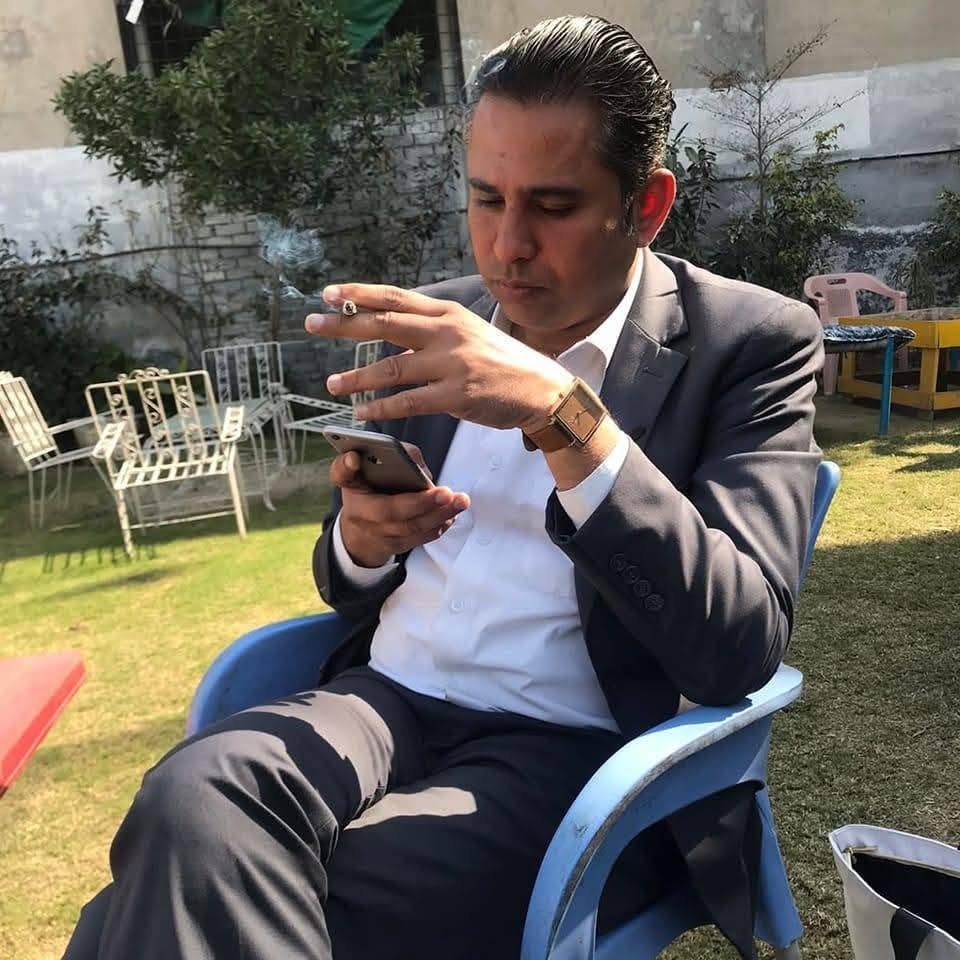
Read the full op-ed LinkedIn profileSource: LinkedIn post and op-ed by Sacha Roytman. This article summarises and quotes an opinion piece; opinions expressed belong to the author cited. Image of Khurram Ali Raza via FFN.
About The Author

Discover more from Faith & Freedom News - FFN
Subscribe to get the latest posts sent to your email.