Trump Signs Executive Order Implementing Historic $550 Billion US-Japan Trade Agreement
New framework establishes 15% baseline tariff on Japanese imports while securing massive investment commitment
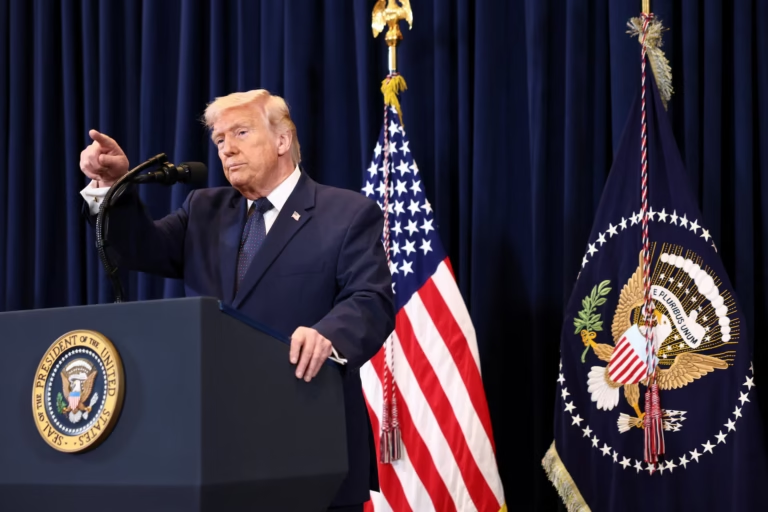
President Donald Trump signed a landmark executive order Wednesday implementing a comprehensive trade agreement with Japan that includes an unprecedented $550 billion Japanese investment commitment in the United States, marking what the administration calls “the largest bilateral investment agreement in American history.”
The executive order, dated September 4, 2025, establishes a new tariff framework based on a July 22 agreement that fundamentally restructures US-Japan trade relations. Under the new system, nearly all Japanese imports will face a baseline 15 percent tariff, with specific carve-outs for critical sectors including aerospace, natural resources unavailable in the US, and generic pharmaceuticals.
Japanese Investment Commitment
“Unlike any other agreement in American history” – President Trump
Key Provisions of the Agreement
- Tariff Structure: 15% baseline tariff on most Japanese imports, replacing previous reciprocal tariffs
- Automotive Sector: Special treatment for automobiles and automobile parts under Section 232 authorities
- Aerospace Exemption: Products under WTO Civil Aircraft Agreement exempt from new tariffs
- Agricultural Access: Japan commits to 75% increase in US rice procurement and $8 billion annually in agricultural purchases
- Manufacturing Investment: $550 billion Japanese investment selected by US Government
The agreement addresses what the administration characterizes as a national emergency related to trade deficits, building on Executive Order 14257 from April 2025 that established reciprocal tariff policies. The new framework is designed to “level the playing field for American producers” while accounting for national security considerations.
Japan’s commitments extend beyond traditional trade measures. The agreement includes provisions for Japan to accept US-manufactured and safety-certified passenger vehicles without additional testing, purchase US-made commercial aircraft, and acquire American defense equipment.
The tariff structure varies by sector and existing duty rates. For Japanese products currently facing tariffs below 15 percent, the new system will bring total duties up to the 15 percent baseline. Products already facing tariffs at or above 15 percent will see no additional duties under the new framework.
The Commerce Department will monitor Japan’s implementation of its commitments, with the President retaining authority to modify the agreement if Japan fails to meet its obligations. The executive order delegates significant implementation authority to the Commerce and Homeland Security departments.
This trade restructuring represents a continuation of the Trump administration’s approach to bilateral trade relationships, emphasizing reciprocity and domestic manufacturing priorities. The $550 billion investment component, if fully realized, would represent one of the largest foreign direct investment commitments in US economic history.
About The Author

Discover more from Faith & Freedom News - FFN
Subscribe to get the latest posts sent to your email.