Trump Declares Victory: U.S. Will Retrieve Iran’s “Nuclear Dust,” Demands Zero Enrichment After 38-Day Operation Epic Fury
Press Secretary Leavitt confirms the two-week ceasefire marks the end of major combat operations — as Hegseth and Gen. Caine detail the obliteration of Iran’s ballistic missile, drone, and naval forces. The Strait of Hormuz is reopened.
WASHINGTON — President Donald J. Trump declared a decisive military victory over Iran on Tuesday following the conclusion of Operation Epic Fury — a 38-day campaign that destroyed Iran’s ballistic missile infrastructure, drone programs, naval assets, and defense industrial base. In a series of statements circulated today, Trump announced the United States will physically retrieve Iran’s stockpile of enriched uranium — what he called “nuclear dust” — and imposed an absolute prohibition on any future uranium enrichment.
White House Press Secretary Karoline Leavitt confirmed the scope of the achievement, noting that Trump had originally estimated Operation Epic Fury would require four to six weeks. Thanks to what she described as “the unbelievable capabilities of our warriors,” U.S. and allied forces completed and exceeded all core military objectives in 38 days.
Leavitt added that the battlefield success generated “maximum leverage,” enabling Trump’s negotiating team to secure a ceasefire agreement and open a path toward a broader diplomatic settlement. Critically, she confirmed that the Strait of Hormuz — the world’s most strategically vital oil chokepoint — has been reopened, a development with sweeping implications for global energy markets.
“Never underestimate President Trump’s ability to successfully advance America’s interests and broker peace.”
— Karoline Leavitt, White House Press Secretary (@PressSec)Hegseth & Gen. Caine: Three Objectives Destroyed, Iran “Begged” for Ceasefire
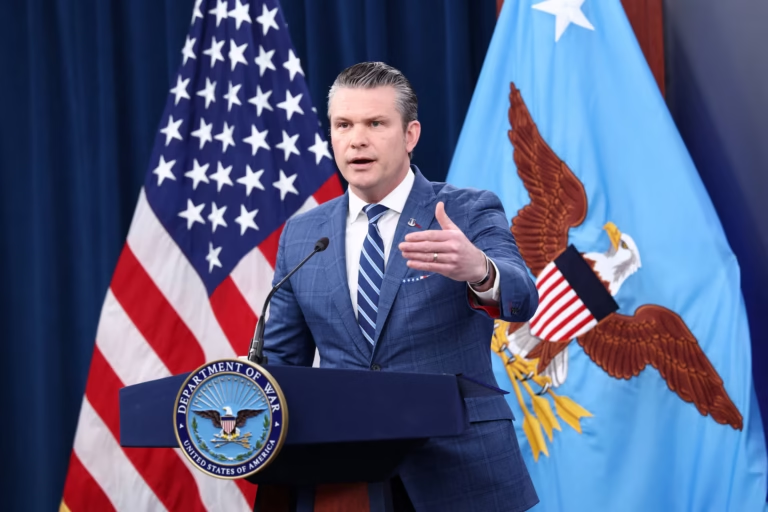
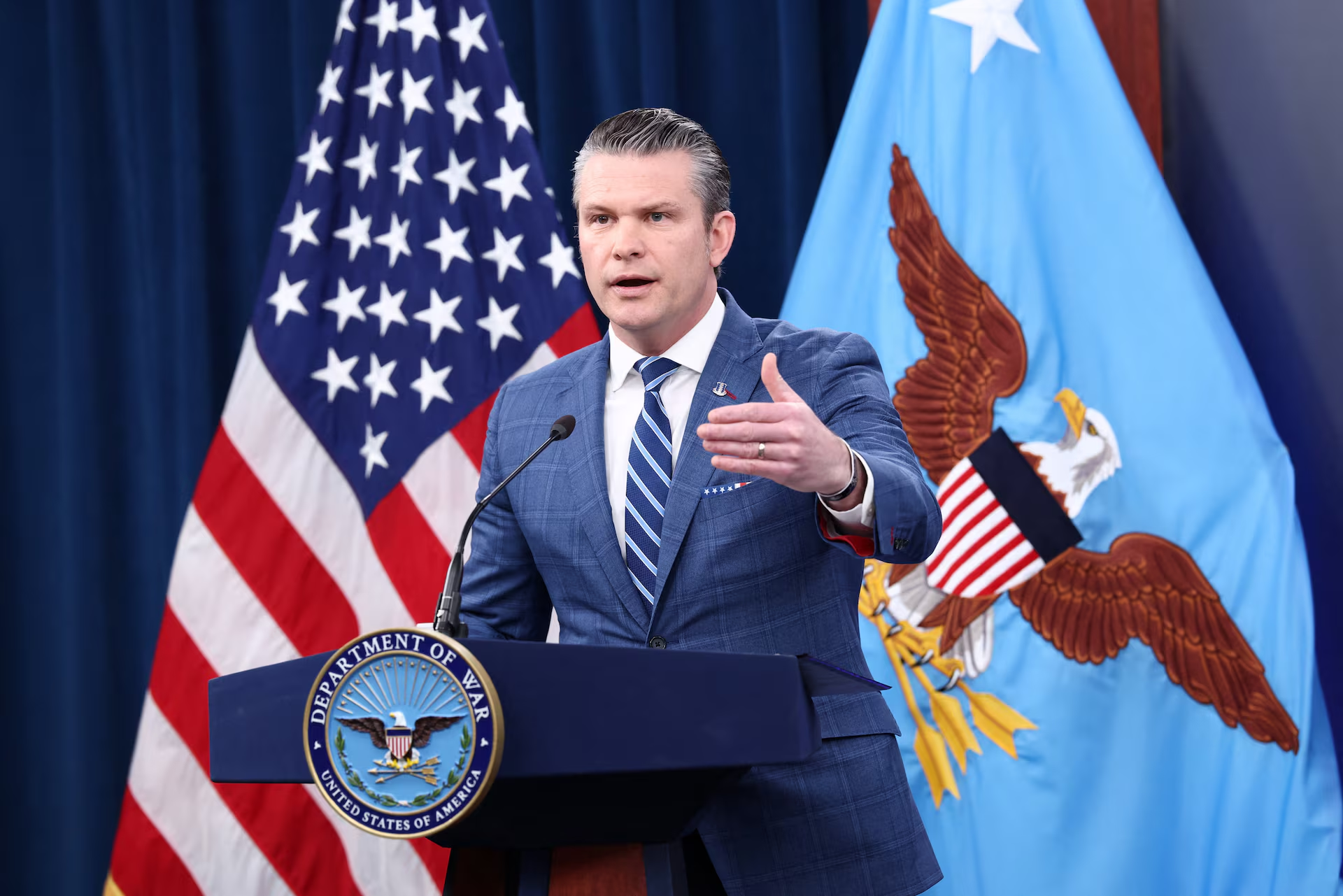
Secretary of War Pete Hegseth and Chairman of the Joint Chiefs of Staff Air Force Gen. Dan Caine held a Pentagon briefing today outlining the military results of Operation Epic Fury. Gen. Caine identified the three core objectives President Trump ordered the Joint Force to achieve when the operation was launched on February 28, 2026.
- Destroy Iran’s ballistic missile and drone capabilities
- Destroy the Iranian Navy
- Destroy Iran’s defense industrial base
Trump’s Nuclear Ultimatum: “Go In, Retrieve the Nuclear Dust” — Zero Enrichment
In what administration officials described as a non-negotiable posture, President Trump outlined a three-part nuclear policy for post-regime-change Iran. The demands go substantially further than the 2015 Joint Comprehensive Plan of Action (JCPOA), which merely imposed limits on enrichment rather than eliminating it entirely.
- “GO IN and retrieve the nuclear dust” — physical removal and verification of Iran’s entire enriched uranium stockpile, including dispersed or deeply buried material
- ZERO enrichment of uranium — permanent and irreversible elimination of all enrichment capabilities
- U.S.-Iran cooperation — Washington will work with Iran’s new post-regime-change government on a path forward
The phrase “nuclear dust” refers to Iran’s accumulated stockpile of enriched uranium — materials spread across multiple facilities, some buried deep underground. Trump’s demand for physical retrieval signals a break from verification-only frameworks: the United States intends to remove the material, not merely inspect it.
“The United States will GO IN and retrieve the nuclear dust. There will be ZERO enrichment of uranium going forward.”
— President Donald J. Trump, April 8, 2026U.S. Forces Remain Combat-Ready — Talks Expected in Islamabad
Despite the ceasefire, the United States has made clear that its military posture in the region remains fully offensive in capability. Secretary Hegseth stated that American forces are “prepared to defend, prepared to go on offense, prepared to restart at a moment’s notice” — a direct warning to Tehran that any violation of ceasefire terms will trigger an immediate return to full combat operations.
Gen. Caine confirmed the Joint Force remains forward-deployed throughout the region. Diplomatic negotiations are expected to intensify in the coming days, with talks reportedly set for Islamabad — reflecting the key role Pakistani mediation played in brokering the ceasefire agreement.
Administration officials framed the two-week ceasefire as an enforcement pause rather than a retreat, emphasizing that any final deal with Iran must include complete, verifiable, and irreversible dismantlement of all enrichment capabilities — a standard that goes well beyond any previous diplomatic framework.
Trump himself, in remarks tied to the ceasefire announcement, noted that he had deliberately spared certain Iranian economic targets once Tehran accepted the ceasefire — framing the decision as an act of mercy that opens the door to future cooperation. He described Iran as having undergone “a very productive Regime Change,” suggesting U.S. recognition of internal shifts in Tehran without a formal occupation.
“We’re going to make sure Iran complies with this ceasefire, and then ultimately comes to the table and makes a deal. We’ll stay put, stay ready, stay vigilant.”
— Secretary of War Pete Hegseth (@SecWar), Pentagon Briefing, April 8, 2026The broader regional implications are significant: Iran’s ballistic missile, drone, and naval forces have been rendered combat-ineffective for years according to Pentagon assessments; the Strait of Hormuz — through which roughly 20% of global oil flows — has been reopened; and the United States has established, for the first time, a physical denuclearization framework that demands removal rather than inspection.
Supporters of the operation hailed it as the definitive restoration of U.S. deterrence in the Middle East. Critics, including some allied governments and domestic voices, continued to raise concerns about long-term regional stability, oil market volatility, and the durability of ceasefire compliance. The administration has not publicly addressed a timeline for the nuclear retrieval mission or the formal structure of post-ceasefire negotiations.
This report is based on official White House statements, the Pentagon briefing by Secretary Hegseth and Gen. Caine, Rapid Response 47 dispatches, and President Trump’s public statements as of April 8, 2026. The situation remains fluid. Faith & Freedom News will continue to update as events develop.
About The Author

Discover more from Faith & Freedom News - FFN
Subscribe to get the latest posts sent to your email.