Five Years of the Abraham Accords: An Inside Perspective
Shiri Fein-Grossman, a key architect of Israel’s historic normalization agreements, reveals the strategic vision and meticulous planning that transformed Middle Eastern diplomacy.
Marking the fifth anniversary of the Abraham Accords, the Britain Israel Communications and Research Centre (BICOM) hosted a detailed briefing in Jerusalem featuring Shiri Fein-Grossman, CEO of the Israel–Africa Relations Institute and former senior official at Israel’s National Security Council (NSC). Speaking with BICOM’s Chief Executive Richard Pater, Fein-Grossman offered a rare inside look at the origins, mechanics and resilience of the agreements that reshaped Israel’s ties with the UAE, Bahrain, Morocco and beyond.
Fein-Grossman, who served more than a decade in the NSC and ultimately headed its Foreign Policy Branch for Regional Affairs, played a central role in coordinating the interagency work that brought the accords to life. She stressed that the success of the agreements stemmed not only from diplomatic breakthroughs but from the extensive bureaucratic infrastructure built behind the scenes.
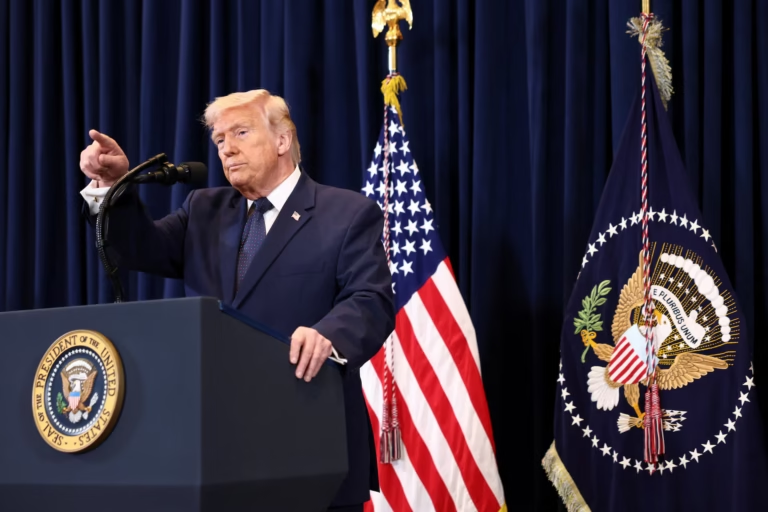
Fein-Grossman recalled the intense pace of negotiations in 2020, driven by what she called a “perfect storm” of regional and political factors. These included concerns over potential Israeli annexation in the West Bank, shared anxieties about Iran’s regional ambitions, the Trump administration’s desire for foreign policy achievements ahead of U.S. elections, and the personal visions of leaders such as Mohammed bin Zayed and Mohammed bin Salman.
Momentum, she noted, became a strategic doctrine in itself.
She also highlighted Morocco’s role, noting that U.S. recognition of Moroccan sovereignty over Western Sahara became a crucial element in renewing and deepening ties. Israel and Morocco had maintained intermittent relations since the late 20th century, but the accords elevated engagement to full normalization.
Throughout the discussion, Fein-Grossman emphasized the importance of building redundancy and breadth into the system so that regional challenges—such as conflicts involving Gaza—would not collapse newly formed diplomatic bridges. The flat, multi-layered structure of agreements, she argued, has proven essential to the accords’ durability.
Looking ahead, she expressed cautious optimism about expanding normalization to Saudi Arabia and parts of Africa. However, she said any future breakthrough would depend on a similar convergence of interests, leadership alignment and timing.
Now focusing on strengthening Israel’s engagement in sub-Saharan Africa, Fein-Grossman framed the Abraham Accords as part of a broader regional transformation still underway.
About The Author

Discover more from Faith & Freedom News - FFN
Subscribe to get the latest posts sent to your email.