Israel Kills Hezbollah Operative Posing as Journalist — Weapons Cache Found in School Bearing UN Markings
The IDF says it eliminated a Radwan Force terrorist who used press credentials as cover to expose Israeli troop positions — while separately uncovering anti-tank rockets and explosives stored inside a southern Lebanese school alongside UN refugee agency markings.
Battlefield claims from both Israel and Hezbollah-affiliated media could not be independently verified at time of publication. Al-Manar television’s assertion that two Lebanese broadcast journalists were killed in the strike has not been confirmed by independent sources. FFN will update this report as further verification becomes available.
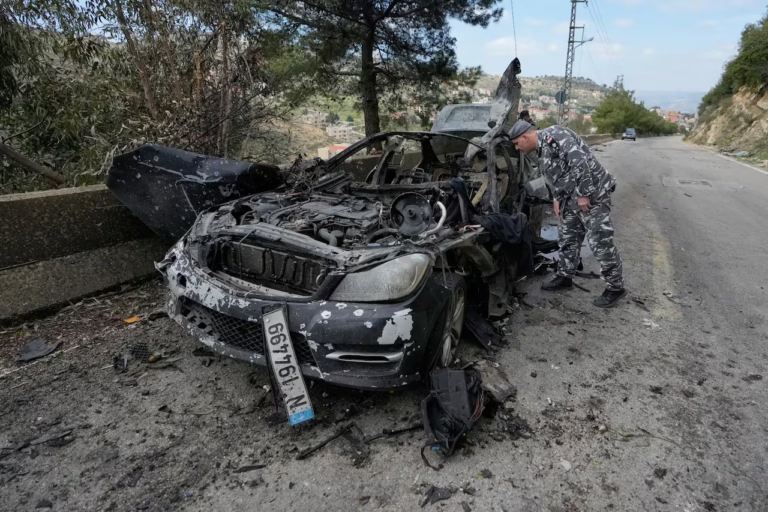
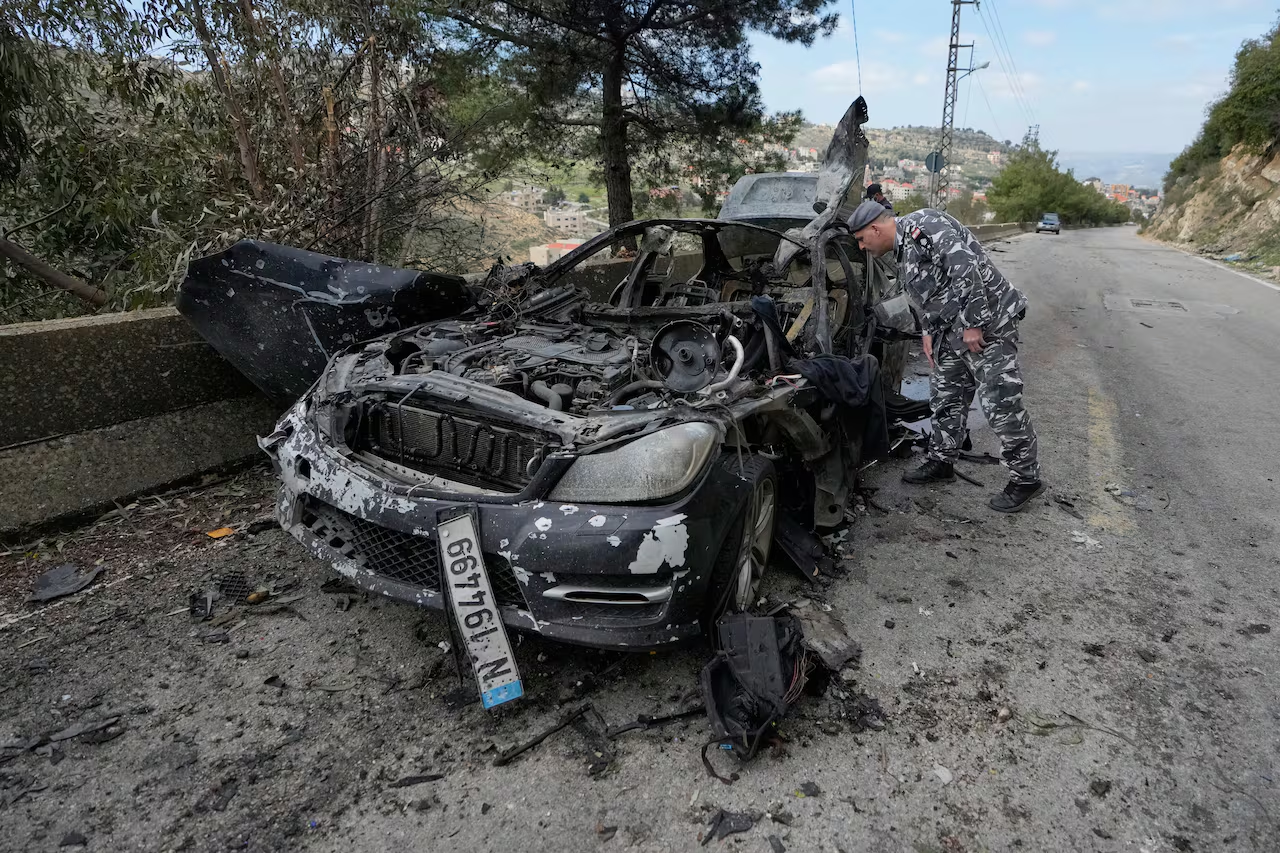
Israel’s military said Saturday it had killed a key “Hezbollah terrorist” who allegedly revealed Israeli troop positions while posing as a journalist — amid intensifying clashes with the Iran-backed group along the northern front in Lebanon.
“For years, Ali Hassan Shaib operated as a Hezbollah Radwan Force terrorist under the guise of a journalist for the Hezbollah-affiliated Al-Manar network,” the Israel Defense Forces said in an official statement. The IDF said Shaib exposed Israeli troop positions in southern Lebanon and maintained direct contact with Hezbollah operatives throughout his time posing as a media worker.
Turns out the ‘press vest’ was just a cover for terror.
— Israel Defense Forces, official statementIsrael has maintained that Hezbollah has a history of embedding operatives among journalists to avoid detection and airstrikes — a tactic that complicates international law governing the protection of media workers in conflict zones.
Conflicting Claims Over Journalists Killed
However, Al-Manar television — Hezbollah’s own broadcaster — reported that an Israeli strike killed “at least two Lebanese broadcast journalists,” a claim that could not be independently verified. Journalist advocacy groups have previously expressed concern about reported attacks involving media workers in conflict zones.
Ali Hassan Shaib was a member of the Hezbollah Radwan Force using journalist credentials as cover.
Shaib directly communicated Israeli troop positions to Hezbollah operatives.
Hezbollah routinely embeds operatives within media organizations to exploit press protections.
An Israeli strike killed “at least two Lebanese broadcast journalists.”
Al-Manar has not provided independent evidence distinguishing combatants from journalists.
Claims originate from Hezbollah’s own media arm and have not been confirmed by third-party sources.
Weapons Found in School — Alongside UN Markings
The reported strike came shortly after the Israeli military highlighted what it described as a systematic failure by the United Nations to prevent Hezbollah from storing weapons in civilian infrastructure. Video footage reviewed by Worthy News appeared to confirm these findings.
- Anti-tank rockets and missile launchers
- Mortar shells and grenades
- Light firearms and explosives
- All found alongside markings from UNHCR — the United Nations refugee agency
“Inside of a school in the area of Al-Khiyam in southern Lebanon, IDF troops found anti-tank rockets, mortar shells, grenades, launchers, light firearms, explosives, and more,” the Israeli military said in comments monitored by Worthy News. “All of this was found alongside UNHCR markings of the United Nations,” it added.
There was no immediate response from United Nations officials at the time of publication. The discovery adds to a pattern of Israeli allegations — some corroborated by independent footage — that Hezbollah uses schools, hospitals, and UN-marked facilities as cover for weapons storage and military operations.
Clashes Escalate on Lebanon Front
The developments come as fighting between Israel and Hezbollah has intensified alongside the broader regional war involving Iran and its allies. Hezbollah has said it targeted Israeli troops and positions in recent days, including attacks near border areas — though battlefield claims from both sides could not be independently verified.
Observers warn the continued escalation along the Lebanon front risks further widening the conflict across the Middle East, particularly as Iran’s own military infrastructure faces severe degradation from ongoing U.S.-Israeli operations. Read FFN’s full Iran coverage: Iran’s Regime Fractures: President Clashes with IRGC as Economy Teeters on Collapse.
Israeli officials report the deaths of five soldiers in the Lebanon campaign, along with civilian casualties from rocket fire. Lebanon’s health ministry claims over 1,200 people have been killed in Israeli strikes, though it does not differentiate between combatants and civilians — a distinction that remains fiercely contested.
As Israel signals an expanding footprint in southern Lebanon, some prophecy watchers are carefully observing what such developments could represent — not only geopolitically, but spiritually.
“I will whistle for them and gather them… I will bring them into the land of Gilead and Lebanon, until no more room is found for them.”
This passage is striking in that it specifically mentions Lebanon and Gilead as part of the overflow of Israel’s restoration — an imagery of abundance and regathering so complete that the land itself struggles to contain those returning.
“The captives of this host of the children of Israel shall possess the land of the Canaanites as far as Zarephath.”
Zarephath is historically identified along the Lebanese coast, between Sidon and Tyre — modern-day Lebanon. These passages point to a sequence: regathering, expansion, and ultimately the establishment of the Kingdom under the Lord’s authority.
Whether current military developments directly align with these prophecies remains to be seen. However, the convergence of events in Israel and Lebanon draws renewed attention from those who study the prophetic Scriptures — as both a warning and an invitation calling hearts to readiness in what many believe could be a pivotal moment in redemptive history.
About The Author

Discover more from Faith & Freedom News - FFN
Subscribe to get the latest posts sent to your email.