
IRF Summit Opens in Washington with Call to Confront Rising Religious Repression
Sixth annual International Religious Freedom Summit convenes hundreds of advocates as co-chairs warn religious restrictions are rising worldwide—even as the movement to defend conscience rights gains strength
The sixth annual International Religious Freedom Summit opened Monday, Feb. 2, in Washington, D.C., with a call to intensify global advocacy for freedom of belief, as co-chairs warned that religious restrictions and persecution are rising worldwide even as the movement to defend conscience rights gains strength.

A Movement at a Crossroads
Addressing hundreds of advocates, faith leaders and policy experts at the Washington Hilton, IRF Summit co-chair Dr. Katrina Lantos Swett, president of the Lantos Foundation for Human Rights, said the international religious freedom movement stands at a crossroads.
The two-day summit, running through Tuesday, brings together more than 90 organizations representing over 30 faith traditions. The event features plenary sessions, spotlight presentations and breakout tracks focused on action, accountability and awareness.

A Global Movement Feared by Dictators
Co-chair Sam Brownback, who served as U.S. ambassador-at-large for international religious freedom from 2018 to 2021, framed the movement as both a moral and geopolitical struggle.
Brownback described people of faith living under repressive regimes as “our greatest ally,” saying their perseverance and public witness challenge authoritarian systems from within.
Summit Growth and Global Reach
The IRF Summit was launched in 2021 and has grown into one of the largest civil society gatherings focused on advancing freedom of religion or belief worldwide. Summit partners say their goal is to build political and public support for international religious freedom and to encourage governments, civil society and faith communities to defend conscience rights across borders.
In her remarks, Lantos Swett said the movement’s growth has been fueled by a broad coalition committed to speaking on behalf of those who suffer because of their beliefs.
Summit Charter and Principles
The summit is guided by a charter adopted in 2021 that affirms freedom of religion and conscience as a universal human right rooted in human dignity and protected under international law, including Article 18 of the Universal Declaration of Human Rights.
The charter defines religious freedom as encompassing:
- Individual belief
- Communal practice
- Public expression
It calls on governments, religious bodies and civil society organizations to take practical steps toward ensuring freedom of religion and belief for all people.
High-Profile Speakers and Messages
The summit featured addresses from distinguished political leaders, including former U.S. House Speaker Nancy Pelosi, who delivered a powerful message from the Dalai Lama, the Tibetan Buddhist spiritual leader who lives in exile in India.
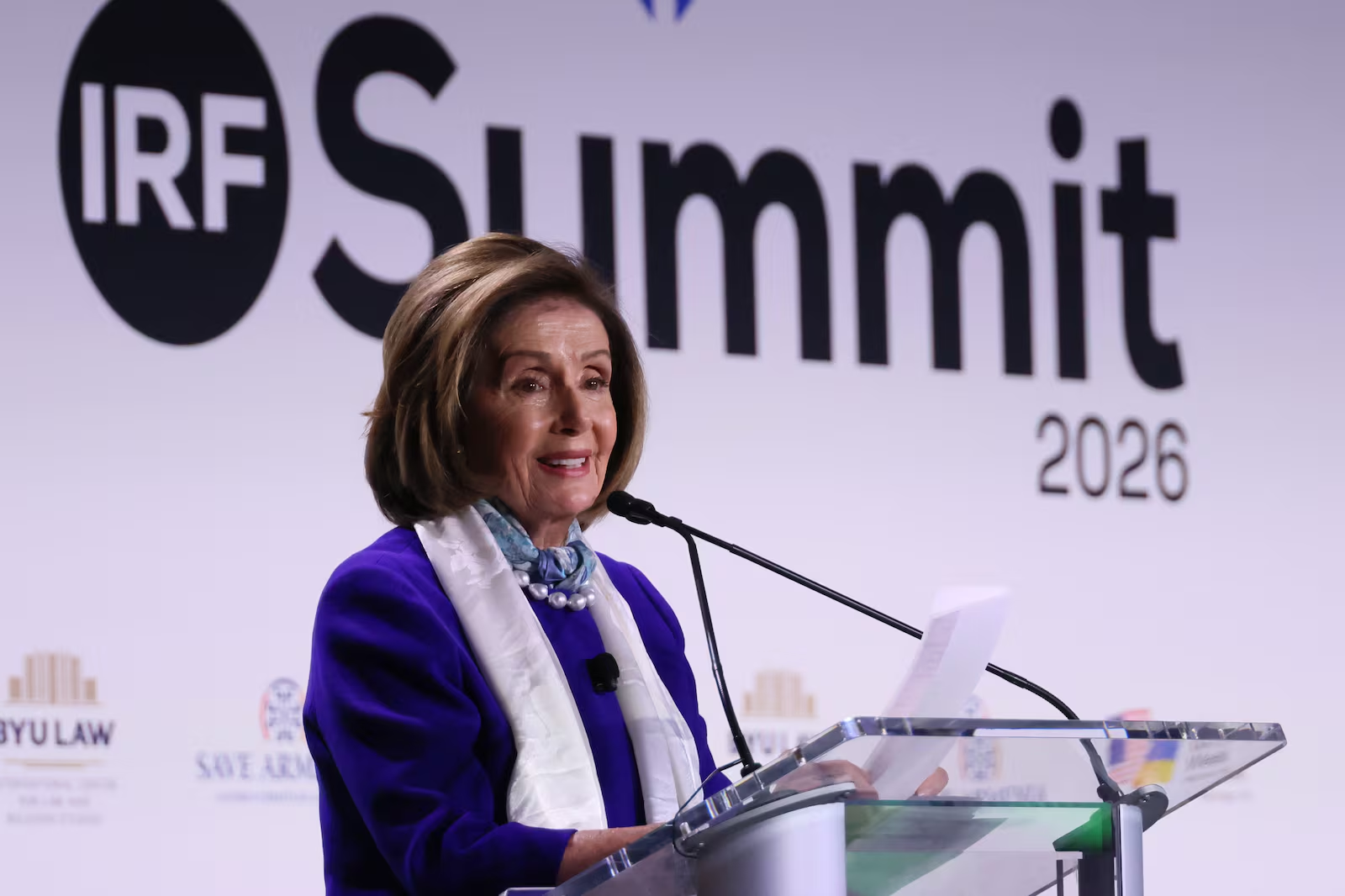
Former President George W. Bush also addressed the gathering by prerecorded video message, emphasizing the plight of those who suffer for their faith.
U.N. Ambassador on Religious Persecution
In a remarkable display of unity across political divides, Trump administration officials argued for the United Nations from the same stage where the Dalai Lama provided an inspiring message delivered by Nancy Pelosi. Hundreds of vastly different people—as different as President Donald Trump and Pelosi or evangelicals and Muslims—united over gut-wrenching first-person accounts of shocking religious persecution, from beheadings and other killings to abduction, imprisonment and sexual violence.
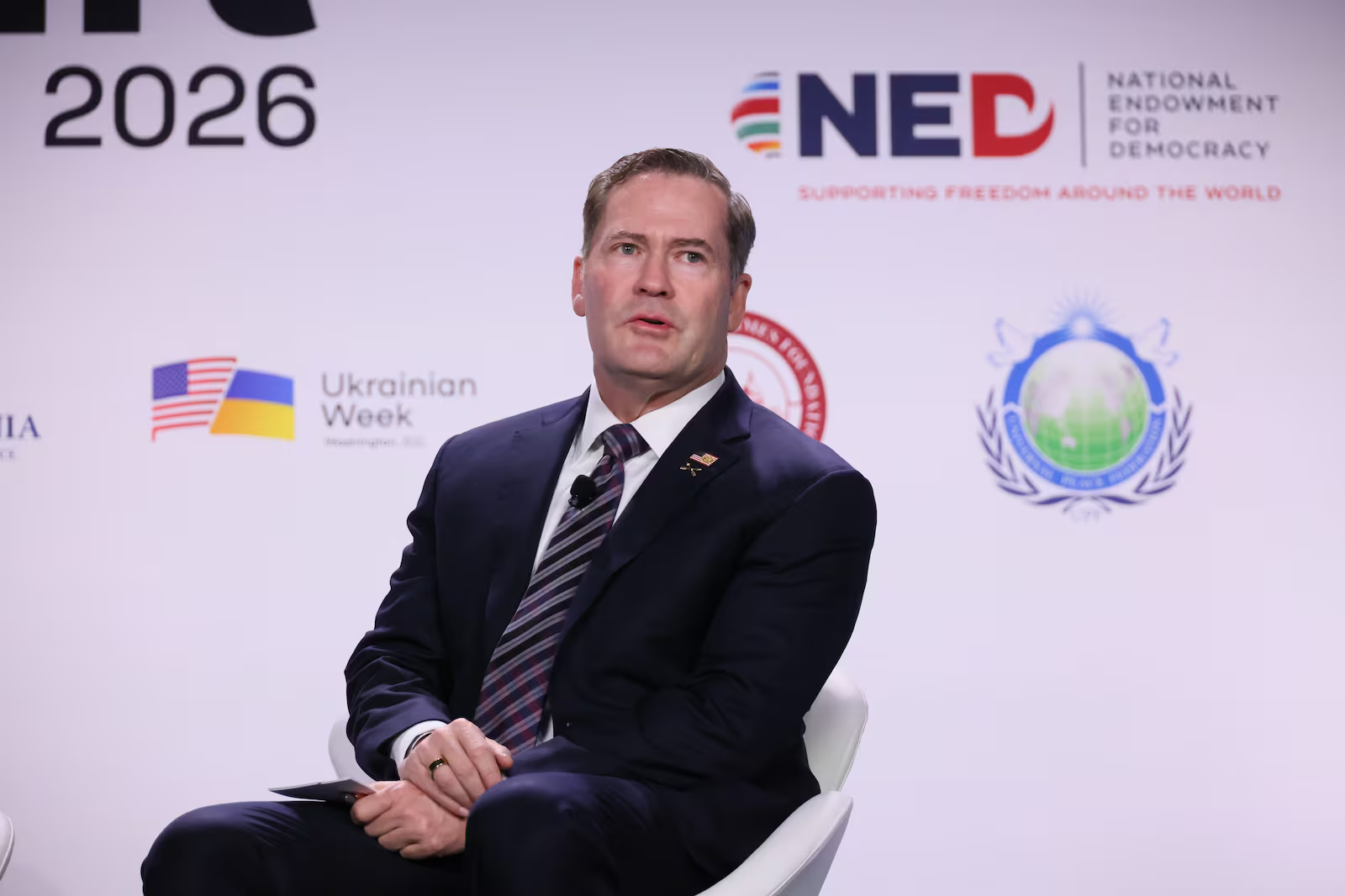
The unthinkable suffering is exactly what made Trump’s ambassador to the United Nations describe the U.N. as indispensable despite the president’s well-known attacks on that beleaguered international institution.
Ambassador Waltz emphasized the urgency of protecting persecuted Christians and other religious minorities:
Rising Authoritarianism and Religious Freedom
Maureen Ferguson, commissioner for the U.S. Commission on International Religious Freedom, told participants that people of faith are frequently targeted by authoritarian governments.
Countries of Particular Concern
Summit speakers highlighted specific regions and countries where religious persecution is most severe. Lantos Swett detailed that China, Iran, and Russia are at the “top of the list” of worst countries when it comes to religious freedom matters.
Regarding China specifically, she expressed deep concern:
Brownback agreed, noting that China produces technology that “goes out to, we think, nearly 80 countries for oppression.”
Ferguson praised the Trump administration for redesignating Nigeria a country of particular concern in response to violence by Islamist groups perpetuated against predominantly Christian communities, and in some cases moderate Muslim communities.
Transnational Repression and Emerging Threats
Current concerns highlighted at the summit include what is known as “transnational repression”—where authoritarian regimes extend their reach beyond national borders to intimidate, harass, or harm dissidents and religious minorities.
🌐 Transnational Repression
Bad actors reaching the long hand of violence, threat, intimidation, and harassment beyond their national borders
🤖 AI and Technology
Concerns about artificial intelligence and how it “will impact for good and for ill, the defense of conscience rights”
📢 False Propaganda
Disinformation campaigns targeting religious communities and freedom advocates
The Movement’s Path Forward
Brownback outlined the movement’s strategic position and next steps during a Feb. 2 summit panel:
He emphasized the need for coalition-building:
A Nonpartisan Cause
Lantos Swett emphasized that the cause for religious liberty transcends political divisions:
Combating Nihilism with Purpose
Lantos Swett noted that the movement is growing in part due to “an unease about the pervasive nihilism we see in the world around us.”
She expressed hope that this search for meaning will help recruit a new generation of leaders to the movement “because they are starting to understand how important it is to have a defining purpose and sense of meaning and consequence to your life.”
Religious Freedom and National Security
Nicole Bibbins Sedaca, the Kelly and David Pfeil Fellow at the George W. Bush Institute, made the connection between religious freedom and national security explicit:
Scott Busby, senior associate at the Center for Strategic and International Studies, noted that “religious freedom is a barometer, generally I have found in my career for how other freedoms are treated similarly.”

Watch Summit Discussions
NTD covered the IRF Summit 2026 discussion on identifying red flags before religious persecution escalates
Watch the Full Discussion →Looking Ahead
Organizers say the annual gathering is intended to strengthen cooperation among advocates and to draw global attention to religious persecution, discrimination and violence, which they describe as growing threats to social stability, human rights and peace.
As the summit concluded, participants left with renewed commitment to the cause of religious freedom, armed with new strategies, partnerships, and a deeper understanding of both the challenges ahead and the growing global movement determined to confront them.
Sources: This comprehensive article draws from multiple sources including NTD coverage, EWTN News reporting, OSV News interviews, and official IRF Summit communications. For more faith and freedom news, visit Faith & Freedom News.
About The Author

Discover more from Faith & Freedom News - FFN
Subscribe to get the latest posts sent to your email.


